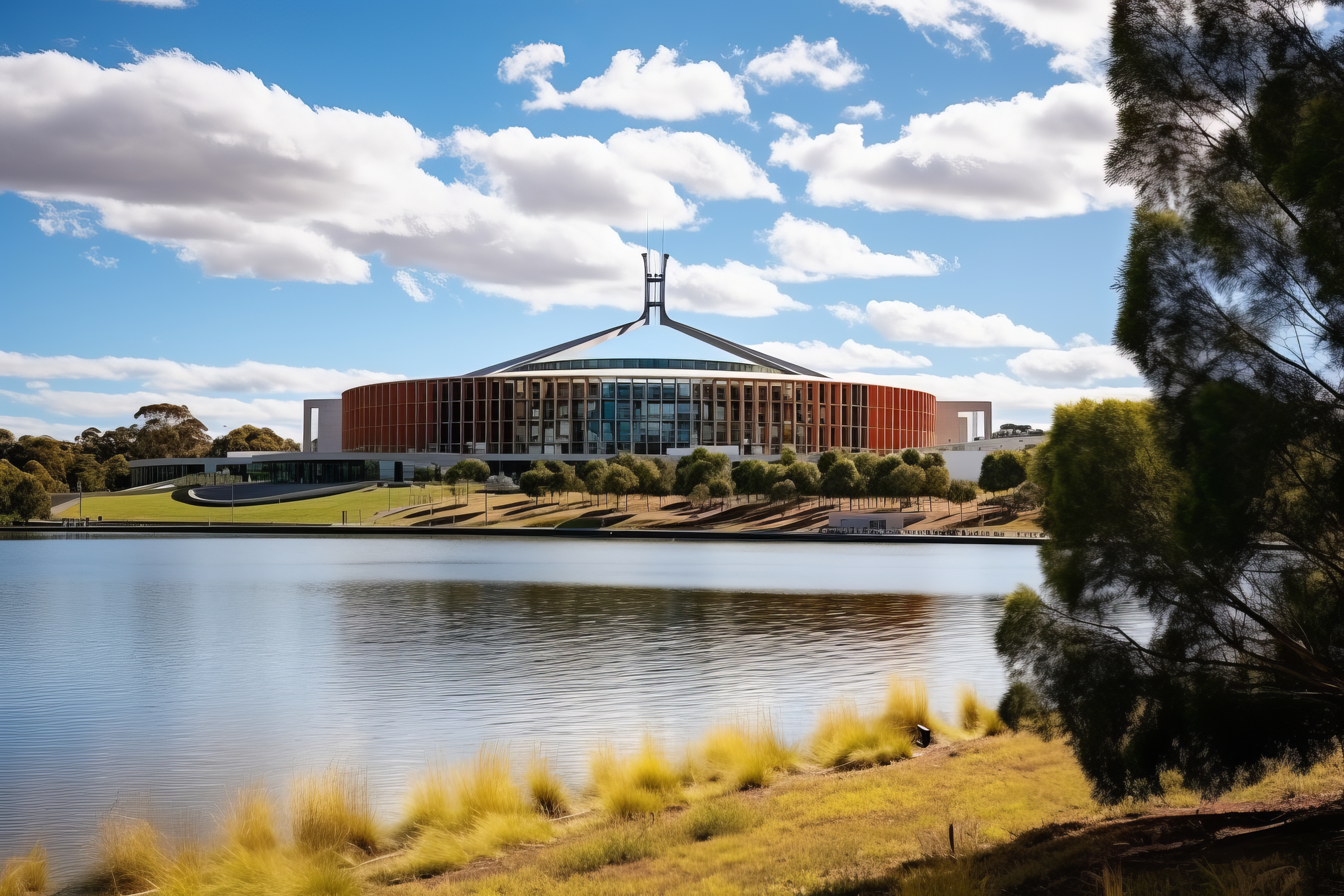
A capital built around government
When the Australian colonies federated, a purpose-built capital was planned to seat the new national government, and that founding purpose still shapes the city's economy more than a century later. The Australian Capital Territory (ACT) is overwhelmingly a service economy, and the single largest contributor to economic output is public administration and safety. That makes the territory unusually reliant on the public sector compared with other Australian jurisdictions, where mining, agriculture or manufacturing loom larger.
In practice this means the rhythms of the federal government, including the budget cycle, machinery-of-government changes and shifts in public-service staffing, ripple through the local economy more than they do in other states. For current measures of the size and composition of the ACT economy, including the share made up by services, the Australian Bureau of Statistics (ABS) publishes state and territory accounts at abs.gov.au.
- Health care and social assistance, spanning public and private hospitals, aged care, disability services and allied health. As in most of Australia, this is a large and growing source of jobs.
- Education and training, including schools, vocational providers and a notably large tertiary sector for a city of Canberra's size.
- Professional, scientific and technical services, a cluster of consulting, engineering, legal and advisory firms, much of it servicing government clients.
- Construction, which is significant given ongoing government infrastructure projects and steady residential development across the territory's growing suburbs.
This mix gives Canberra a workforce that is, on average, highly credentialed and white-collar. The territory consistently records among the highest household incomes and lowest unemployment rates of any Australian jurisdiction. Those are moving figures rather than fixed facts, and the current numbers are published by the ABS at abs.gov.au.
The institutions that define the city
Several large institutions anchor employment and give the local economy its distinctive character. The federal Australian Public Service is the most prominent, alongside the Department of Defence, which maintains a substantial Canberra presence. Research and higher education form a second pillar: national science agencies such as the CSIRO, together with the Australian National University and the city's other universities, employ scientists, academics and support staff in significant numbers, and draw students and visiting researchers into the local economy.
A third, more recently prominent cluster is cybersecurity and information-technology services. Because so many federal agencies need secure digital systems, a community of IT firms, security specialists and contractors has grown up around government demand. Together these clusters help explain why Canberra's economy is less exposed to commodity-price swings than resource-heavy states, and more exposed to decisions made about the size and shape of the public sector.
What the concentration means in practice
A government-anchored economy has trade-offs. On one hand, public-sector employment tends to be relatively stable, and the presence of large institutions supports a deep professional-services and knowledge economy. On the other, the territory's fortunes are closely tied to federal spending and staffing decisions, so national budget settings and policy changes can have an outsized local effect. The construction and property sectors, in turn, respond to both government investment and population growth as the public-service workforce expands or contracts.
For anyone trying to understand the labour market, the ABS publishes regular data on employment by industry, participation and unemployment, while broader economic conditions such as interest rates and inflation are covered by the Reserve Bank of Australia at rba.gov.au.
A note on cost of living and incomes
Canberra's economic strengths come with a higher cost of living than the Australian average, with housing the largest driver, followed by groceries, utilities and transport. Energy and heating costs are notable given the city's cold winters, and the relatively low-density, car-oriented urban form makes transport a meaningful household expense. Those higher costs are partly offset by the high median incomes that the public-sector and professional economy supports. Specific price levels, rents and median values shift constantly and are tracked by the ABS and by private market reports rather than being fixed numbers.
Where to find current figures
This overview describes durable structural features of the Canberra economy rather than point-in-time statistics. For the latest data on output, industry composition, incomes and employment, the authoritative source is the ABS. For broader monetary and economic context, the Reserve Bank of Australia is the reference point. This article is general information only and is not financial advice.
Sources: Australian Bureau of Statistics, Australian National Accounts: State Accounts; Reserve Bank of Australia; Economy of the Australian Capital Territory (overview).
Related Articles
This article was compiled by AI and screened before publishing. See our editorial standards.
Sources Include (But not Limited to)
Source material used in preparing this article is listed below so readers can check the original record.