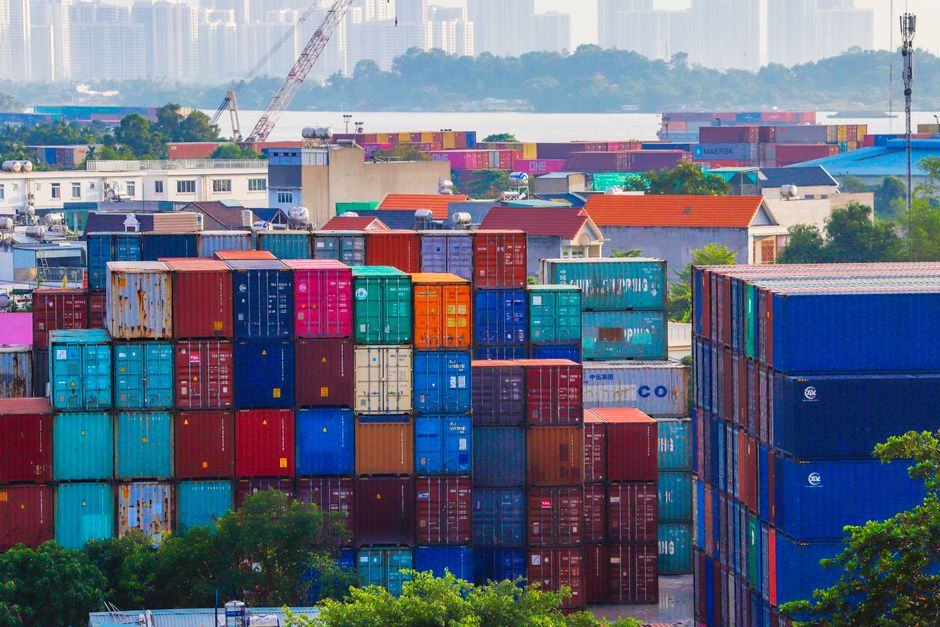
When you buy a t-shirt, a coffee maker, or fresh seafood, you're usually buying the end result of a chain that stretches across multiple continents. Raw materials are extracted in one country, manufactured in another, packaged in a third, and shipped through a fourth before landing on an Australian shelf. This is a global supply chain, and it underpins nearly everything in modern life.
What is a supply chain?
A supply chain is the journey a product takes from its origin to your hands. It includes sourcing raw materials, manufacturing, quality checks, packaging, storage, transport, and retail. Every step involves different companies, often in different countries, co-ordinating with each other. A smartphone, for example, might have semiconductors made in Taiwan, metals mined in Congo, assembly in Vietnam, and distribution through Australia. When any part of this chain breaks down, prices can rise or shelves empty.
Why do supply chains span the globe?
Companies organise supply chains globally because it's cheaper and more efficient. Different countries have different advantages: some have abundant raw materials, others have cheaper labour, and some have specialised expertise or technology. A shoe manufacturer might source leather from Argentina, manufacture in Indonesia where labour costs less, and sell globally. Globalisation means businesses can save money, which often (though not always) translates to lower prices for consumers. Companies also diversify their suppliers across regions to reduce risk: if one factory is disrupted, others can fill the gap.
What disrupts supply chains?
Supply chains face constant pressures. Weather events damage ports or farms. Political instability disrupts transport routes. Industrial action stops production. Disease outbreaks close facilities or borders. Major disruptions can take months or years to resolve. During these periods, consumers often see shortages and price increases. A drought in a wheat-growing region affects bread prices months later. A container ship blocked in a shipping lane delays everything downstream. These ripple effects can persist long after the initial problem is solved because businesses must rebuild stockpiles and reorganise logistics.
How do companies manage supply chain risk?
Businesses try to balance cost savings with resilience. Some hold extra inventory to cushion shocks, but this ties up money. Others build relationships with multiple suppliers in different regions so they're not dependent on a single source. Technology now plays a major role: companies use real-time tracking, data analysis, and artificial intelligence to predict problems and reroute goods before disruptions occur. Despite these efforts, truly unexpected events still cause problems, and the further a supply chain stretches, the more points of failure exist.
What it means for Australia
Australia depends heavily on global supply chains. The country imports manufactured goods, electronic components, and many consumer products because manufacturing costs are lower elsewhere. Australian exporters of resources, agricultural products, and processed goods rely on lengthy supply chains to reach world markets. This makes Australia vulnerable to global shocks: a disruption to shipping routes affects prices at Coles and Woolworths; a downturn in China reduces demand for Australian iron ore and coal. However, Australia also benefits from lower prices and access to goods that would be expensive to make locally. During supply chain shocks, governments and businesses have invested in boosting local manufacturing capacity in critical areas like medicines and semiconductors to reduce dependence on fragile global networks. Australian retailers and manufacturers increasingly try to diversify suppliers beyond traditional sources in Asia to manage risk.
The bottom line
Global supply chains are the hidden machinery that keeps modern life affordable and stocked. They work brilliantly most of the time, allowing goods to travel cheaply across the world. But they're fragile networks with many moving parts, and disruptions anywhere can ripple across the globe. For Australians, this means understanding that price changes and shortages often have roots in distant events, and that building more resilient local capacity can offer stability even as global trade remains essential.
This article was compiled by AI and screened before publishing. See our editorial standards.
Sources Include (But not Limited to)
Source check passedSource material used in preparing this article is listed below so readers can check the original record.