The World
Australia Mines Half World's Bauxite but Smelts Almost None
Australia mines half the world's bauxite but smelts almost none of it. Here's why that matters for your electricity bill and the nation's economic future.
The World
Australia mines half the world's bauxite but smelts almost none of it. Here's why that matters for your electricity bill and the nation's economic future.
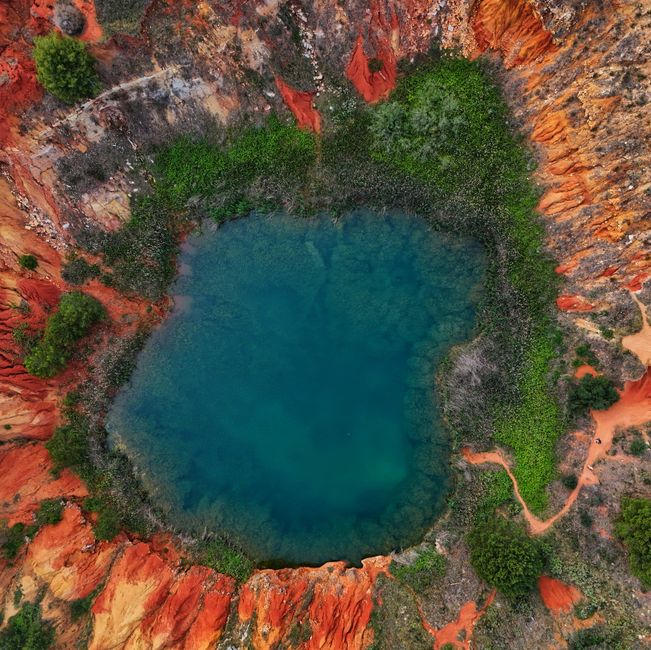
Australia digs up nearly half the world's bauxite, the raw ore that becomes aluminium. Yet we smelt almost none of it. Instead, we ship tonnes of raw ore overseas, watch other nations turn it into refined aluminium, and then buy the finished product back at a premium. This gap costs Australia billions in lost manufacturing jobs, higher energy costs, and reduced leverage in a global industry worth hundreds of billions annually.
Smelting bauxite into aluminium is one of the world's most energy-intensive industrial processes. It requires massive amounts of reliable, cheap electricity. Australia has the ore and abundant renewable energy potential, yet smelting capacity has collapsed. Decades ago, Australia smelted about 10 per cent of the world's aluminium. Today that figure is near zero. Existing smelters have closed because electricity costs here exceed those in nations subsidising power or using hydroelectric resources at a fraction of our rates. China dominates global aluminium smelting today, controlling roughly half of worldwide capacity and leveraging cheap coal-fired power and government support.
When bauxite leaves Australia as raw ore, it travels to refineries in other countries where it becomes alumina, then to smelters where it finally becomes metal. Each step adds cost, and each step is controlled by multinational firms maximising their own profit margins, not Australia's. The entire value chain fragments our leverage and our returns.
Smelting one tonne of aluminium consumes roughly 12 to 16 megawatt-hours of electricity. At Australian grid prices, that makes smelting uncompetitive against overseas rivals with lower energy bills. Nations with abundant hydropower or government-subsidised electricity have built smelting industries that secure jobs, tax revenue, and industrial capability. Iceland, Canada, and the Middle East have all leveraged cheap or renewable power to attract smelters and control more of the supply chain.
Australia's renewable energy boom theoretically offers a path forward. Solar and wind are increasingly cheap. Yet smelters need stable, long-term power contracts. Grid volatility, transmission bottlenecks, and competing industrial demands mean reliable, affordable electricity for large-scale smelting remains elusive. Other nations are negotiating long-term renewable power deals to attract smelting operations. Australia, with the resources to do the same, has not yet mobilised that strategy at scale.
Raw ore exports earn money, but smelted aluminium earns far more. A tonne of bauxite fetches around 60 to 80 dollars. Refined aluminium sells for ten times that. Every tonne Australia exports as raw ore instead of finished metal represents lost value and lost manufacturing employment. Smelter jobs also anchor regional economies, support supply chains, and build technical expertise that spills into other industries.
Australia's absence from aluminium smelting also means reduced influence over global supply. When China controls half the world's smelting capacity, China shapes pricing, supply flows, and trade relationships. Australia becomes a raw-material supplier dependent on others' decisions. Aircraft, cars, renewable energy infrastructure, and countless consumer goods all require aluminium. Nations that smelt control that supply chain leverage.
Aluminium demand is rising sharply. Electric vehicle batteries, solar panels, renewable energy infrastructure, and modern construction all require aluminium in quantities far larger than traditional uses. The International Energy Agency projects global aluminium demand will nearly double by 2050. Yet new smelting capacity is growing slowly because energy costs and environmental pressure make expansion difficult in developed economies. China keeps expanding. Yet geopolitical tensions, trade disputes, and supply-chain fragmentation all suggest the world will eventually need more distributed smelting capacity.
Australia has the ore, the land, and increasingly the renewable power to capture that opportunity. Instead, the nation watches from the sidelines as global competition for smelting jobs intensifies.
For consumers, Australia's smelting gap translates into higher electricity costs for energy-intensive industries and fewer manufacturing jobs in regions that once relied on aluminium smelting. Regional cities like Tomago and Gladstone have lost major employers as smelters closed or scaled back. For the nation, it means forfeiting tens of billions in annual value-added income and the high-skilled, stable jobs that smelting operations create. Australia's energy system is being reshaped by renewables investment; aligning that infrastructure with smelting revival would transform national manufacturing capacity.
For Australia's global standing, the smelting gap highlights a larger pattern: exporting raw materials while importing manufactured goods limits economic independence and pricing power. As global aluminium demand soars and supply chains reorganise, nations that smelt will hold advantage. Australia's choice to remain primarily a bauxite miner rather than an aluminium smelter is not inevitable. It is a competitive disadvantage written into policy and infrastructure that can be rewritten.
Australia mines half the world's bauxite but smelts almost none of it. That gap costs the nation billions in lost value, manufacturing employment, and supply-chain leverage. Smelting requires cheap, stable electricity and long-term commitment. Australia's renewable energy transition creates an opening to reclaim that industry, but only if policy and investment align to make smelting cost-competitive again. Without that shift, Australia will remain locked in the low-value end of the global aluminium supply chain, watching others profit from the ore beneath our soil.
This article was compiled by AI and screened before publishing. See our editorial standards.
Spread the word
More from The World
The Daily Network — local news across Australia