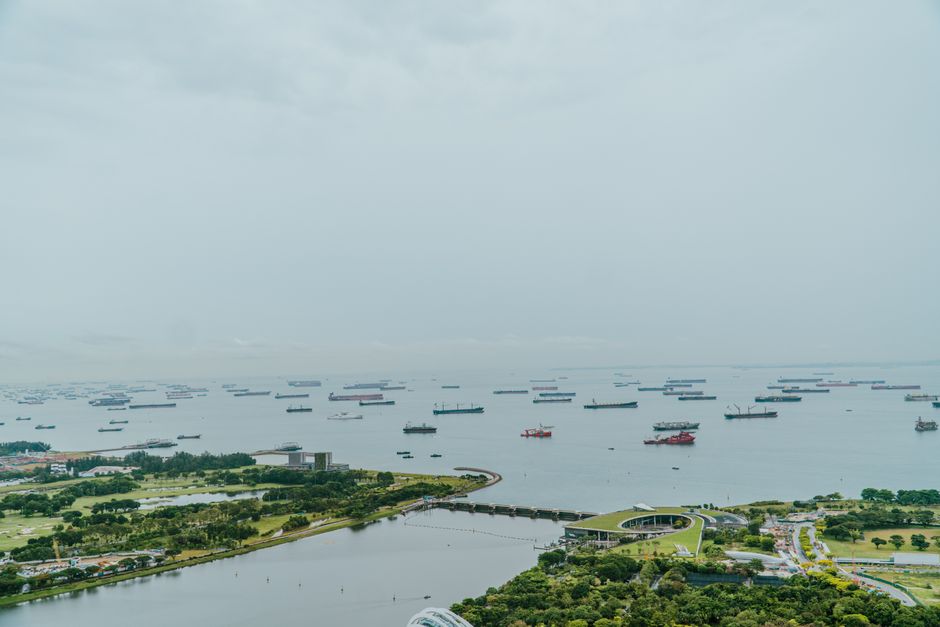
Every garment in an Australian wardrobe has crossed oceans and borders. A single t-shirt might begin as cotton grown in India, get spun into yarn in Vietnam, woven in Indonesia, cut and sewn in Bangladesh, then shipped to a distribution centre in Singapore before arriving at a store in Melbourne. This fragmented system, designed to chase the world's cheapest labour and materials, means fashion is one of the most globally dispersed industries on Earth. When any link in this chain breaks, Australian shoppers feel it immediately through price rises and empty shelves.
Where clothes actually come from
The modern fashion supply chain splits production across the world's poorest nations, where labour costs are lowest. Bangladesh alone makes clothes for roughly one in five garments sold globally. Vietnam, India, Cambodia and Pakistan form a second tier. China, once the world's factory, now handles higher-value items as wages have risen. This geographic spread means no single factory, port, or country controls the industry. Instead, big retailers like Kmart, Target and specialty chains contract with hundreds of manufacturers who themselves subcontract to smaller workshops.
Raw materials follow a separate geography. Cotton grows in India, the United States and Australia itself, but most Australian-destined cotton gets processed overseas before returning as finished fabric. Synthetic fibres like polyester come from petrochemical plants concentrated in China, India and the Middle East. Buttons, zips and thread come from yet more countries. A basic cotton shirt might involve materials and labour from five different nations before hitting an Australian shop floor.
Why distances keep shrinking margins
The spread of production across multiple countries sounds efficient, but it creates hidden costs. Shipping containers move between ports at rates set by global fuel prices and vessel availability. A container of jeans from Dhaka to Sydney might sit in a port for weeks waiting for a berth. Tariffs add complexity: Australian import duties affect final prices, and trade agreements with countries like Indonesia and Vietnam alter the economics of where a garment gets made.
Labour costs, once the main reason for offshore production, have stabilised across Asia as competition for factories has intensified. Factory owners now compete on speed and scale rather than wage cuts alone. A retailer wanting to launch a summer collection must commit to factories months in advance, lock in orders, and hope demand predictions prove accurate. If a trend shifts, retailers absorb the cost of unsold inventory. That risk gets passed to consumers through markups and discounting cycles that define modern retail.
Supply shocks hit Australian shoppers first
Disruptions anywhere in this network ripple to Australian shops within weeks. Port strikes in Shanghai delay container movements to Australia by days or weeks. Bad harvests in India reduce cotton supply and push prices up. Factory closures in Bangladesh over labour disputes reduce production capacity globally. Fuel price spikes increase shipping costs. Even extreme weather in producing nations, from floods in Pakistan to heatwaves in Vietnam, affects supply and cost.
Australian retailers, competing with global e-commerce, operate on tight margins. They cannot absorb supply costs or demand changes easily. Rising shipping rates, delayed deliveries and fabric shortages get passed to shoppers through higher prices or reduced stock. Sales cycles compress: a retailer might hold only two weeks of stock instead of four, making stores feel emptier and creating pressure to order more frequently and pay rush fees.
What it means for Australia
Australians pay more for clothes than many developed economies partly because of distance. Shipping a container from Bangladesh to Sydney costs more per item than shipping to Los Angeles or Rotterdam, where factories are closer. Australian import volumes are small compared to United States or European markets, so retailers cannot negotiate bulk discounts as effectively. The Australian dollar's weakness against the United States dollar and Chinese yuan increases import costs further, since most fashion trade is priced in those currencies.
This fragmented global system also shapes labour and environmental standards. Australian regulations cannot easily reach factories in South Asia, so garments sold here may be made in conditions Australians would not accept domestically. Waste from textile production, largely hidden in overseas factories, does not appear in Australian environmental accounts. Yet Australian consumption drives demand for those factories, making Australian shoppers indirect participants in global labour and environmental practices.
The bottom line
Fashion is one of the world's most complex supply chains because it optimises for cost at every stage. That saves money on some items but creates fragility: the system has no slack, no buffers, no redundancy. When one part breaks, the effect spreads fast. Understanding this explains why a shortage of shipping containers in Southeast Asia raises t-shirt prices in Australian shops, why port delays in Vietnam affect Melbourne store shelves, and why global fuel prices reach the clothing rack. For Australian shoppers, the real cost of a garment is not just the price tag, but the distance and complexity hidden behind it.
This article was compiled by AI and screened before publishing. See our editorial standards.