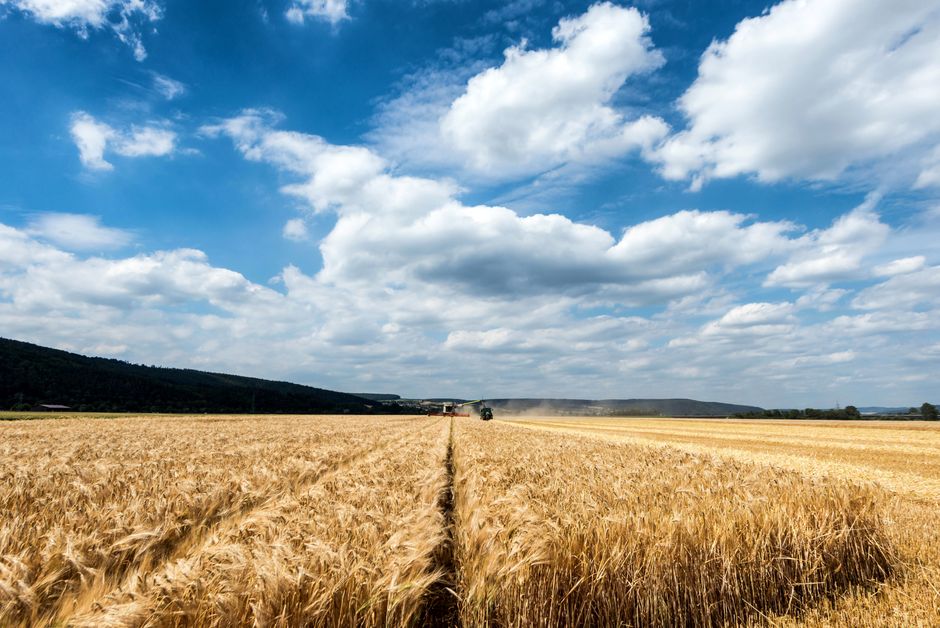
Wheat is the world's most traded food crop. More than one billion people depend on it for survival, yet the price you pay for a loaf of bread is set not by your local baker but by forces operating across oceans and borders: weather in the Black Sea region, government trade policies in Asia, harvests in the American Midwest, and storage decisions made in distant port cities. A drought in one country can push prices higher in another within weeks. Understanding how this global system works reveals why bread prices spike, why some nations face hunger while others have surpluses, and why the world remains vulnerable to shocks no single government can control.
The global supply and demand equation
Roughly 750 million tonnes of wheat are produced globally each year, but production is highly concentrated. Just five countries supply more than half the world's exports: Russia, Ukraine, France, the United States, and Canada. This concentration means that disruptions in any one of these nations immediately affect global availability and price. Ukraine alone accounts for roughly one-tenth of global wheat exports in normal years. India, the world's largest wheat producer, grows almost entirely for its own population and rarely sells internationally, which means global trade depends on a narrow set of suppliers.
Demand is equally concentrated. Countries in North Africa, the Middle East, and South Asia import wheat in massive quantities because they cannot grow enough domestically. Egypt imports more wheat than any other nation on Earth. Bangladesh, Nigeria, and the Philippines together account for a significant share of global demand. This geographic mismatch between where wheat grows and where it is needed creates dependency chains that extend across the planet. A poor harvest in France reverberates in bakeries across Sub-Saharan Africa within months.
How prices are set and transmitted globally
Wheat prices are benchmarked on international futures exchanges, primarily the Chicago Board of Trade. Traders worldwide watch these prices, which fluctuate based on expectations about future supply and demand. When Russia signals a smaller harvest, prices rise immediately, not because bread is immediately scarce but because buyers worldwide anticipate future scarcity and act to secure supplies now. This forward-looking mechanism means wheat prices can double or halve without any immediate change in actual availability.
Once prices move in global markets, they cascade into local economies through interconnected pathways. Importers lock in purchases, shipping costs adjust, and local currencies matter enormously. A country with a weak currency finds imported wheat suddenly unaffordable, even if the global price has barely moved. Countries that subsidise bread for their populations must pay the difference from national budgets, draining resources available for schools and hospitals. This is why wheat prices are inherently political: they affect not just consumers but governments, which struggle to manage the political fallout when bread becomes expensive.
Storage, speculation, and vulnerability
The global wheat system depends on storage. Grain silos in Ukraine, elevators in Canada, and warehouses across the Black Sea region hold reserves that moderate price swings. When harvests are poor in one region, these reserves are drawn down to supply shortfalls elsewhere. But storage is costly and profits are thin, so reserves tend to be minimal. This leaves the system fragile. A single major supply shock-war, drought, flood, or disease-can quickly deplete global reserves and force prices to spike sharply.
Speculation amplifies this vulnerability. Financial investors who have never seen a wheat field can bet on future prices, influencing how much grain is held off the market at any given moment. During price booms, speculation can worsen shortages by encouraging hoarding. During price crashes, investors may exit rapidly, amplifying declines. The 2008 global food price crisis, which contributed to unrest across the Middle East and North Africa, was driven partly by poor harvests but also significantly by speculation and export restrictions imposed by nervous governments trying to protect their own populations.
Why this matters globally
Wheat is not a luxury good. For billions of people, bread is the primary source of calories and the biggest item in household food budgets. When wheat prices double, the poorest households face a choice between eating less or going without other essentials. This directly shapes global poverty, child nutrition, and political stability. Food price spikes are linked to civil unrest, migration pressures, and humanitarian crises. The 2011 Arab Spring was partly triggered by spike in global food prices. Countries dependent on wheat imports cannot easily insulate themselves because they lack domestic production capacity and cannot quickly build it. They are locked into dependency on distant suppliers they cannot control.
Climate change will intensify these pressures. Wheat thrives in cooler regions that are becoming less reliable as temperatures shift. Drought, floods, and heat waves in the world's main growing regions could force significant production declines in coming decades, while global demand continues to rise as populations grow. The concentration of supply among a handful of exporters means that solving this problem requires international cooperation, shared investment in agricultural research, and diversification of production geographies. Yet national governments often respond to food security concerns by restricting exports, which worsens global shortages and deepens the very vulnerabilities they fear.
The bottom line
Your bread price is determined by a vast, interconnected system that spans continents and operates at speeds that local markets cannot match. Wheat markets are efficient at transmitting information and allocating resources globally, but they are also fragile, concentrated, and vulnerable to shocks. Understanding this system reveals why food security is fundamentally a global challenge. No nation can guarantee its own wheat supply without access to international trade. No government can fully insulate its people from global price movements. Bread remains affordable and available for billions only because a complex web of farmers, traders, shippers, and policy makers keeps the global wheat system functioning. When that system breaks, even for brief periods, the consequences spread quickly and hurt the poorest people first.
Sources Include (But not Limited to)
Source check passedSource material used in preparing this article is listed below so readers can check the original record.