The World
Why the world's population is ageing, and what it means
For the first time in human history, the number of older people is outpacing the number of children, and the economic consequences are only beginning to show.
The World
For the first time in human history, the number of older people is outpacing the number of children, and the economic consequences are only beginning to show.
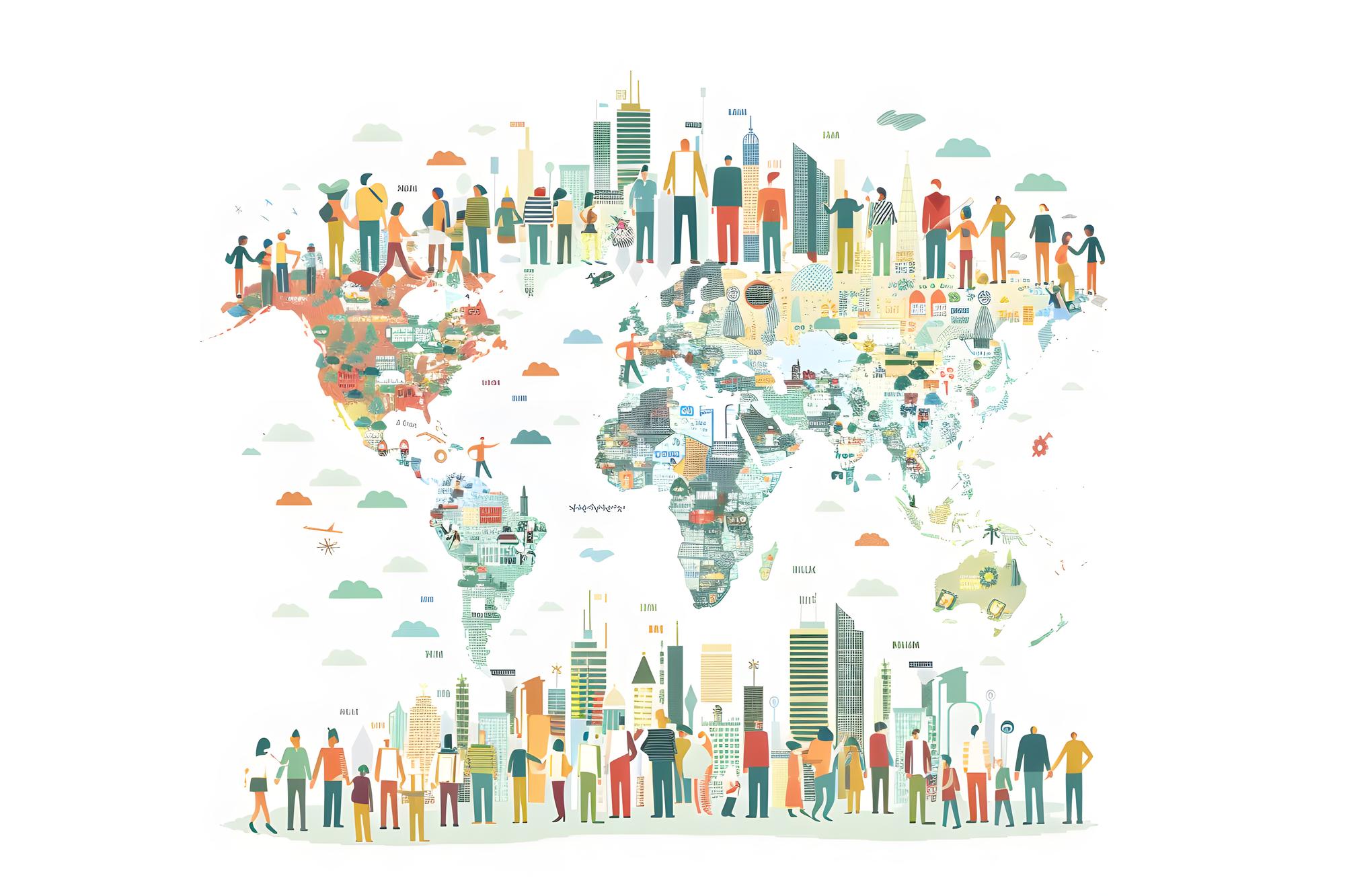
For almost all of human history, populations were young. High birth rates and shorter life expectancies meant that children and young adults made up the bulk of most societies. That pattern is reversing. Across the wealthy world and increasingly in middle-income countries, birth rates have fallen and life expectancy has risen, producing populations that skew older with each passing decade. This is not a crisis in the way a flood or a war is a crisis, but its economic and social consequences are profound and long-lasting.
A population ages when the fertility rate, the average number of children born per woman, falls below the replacement level of roughly 2.1 children. When fewer children are born relative to the existing population, and when people live longer, the median age of a society rises. The result is a shift in the dependency ratio: fewer working-age people relative to the number of retirees and elderly who require care and income support.
This process began in Europe and Japan decades ago and is now underway across East Asia, including in China and South Korea, where birth rates have fallen sharply. Even in regions where fertility remains higher, such as parts of South and Southeast Asia, the trend is moving in the same direction as development progresses and women gain greater education and economic participation.
An ageing population creates predictable fiscal pressures. Pension systems designed for a ratio of several workers supporting each retiree become strained when that ratio narrows. Healthcare systems face rising demand from older populations with more complex chronic conditions. Meanwhile, the workforce that generates the tax revenue to fund these services shrinks relative to need.
Governments respond in different ways: raising the retirement age, adjusting pension formulas, increasing migration to supplement the working-age population, investing in productivity to get more output from fewer workers, or some combination of all four. None of these responses is costless or politically straightforward.
Not all countries are ageing at the same pace. Sub-Saharan Africa remains demographically young, with a large and growing working-age population. Countries that manage their demographic dividend well, by educating and employing their young populations productively, can generate sustained economic growth. Meanwhile, rapidly ageing economies increasingly look to immigration not just as a social question but as an economic necessity.
The divergence creates a global labour dynamic: younger populations in some regions, ageing workforces in others, and migration as one of the mechanisms that partially bridges the gap.
Australia has an ageing population, though its immigration program has moderated the pace compared with countries that accept fewer migrants. The federal budget faces increasing pressure from aged care, the National Disability Insurance Scheme, and healthcare as the proportion of Australians over 65 grows. Superannuation was designed in part to reduce future pension costs by encouraging self-funded retirement, but the adequacy of retirement savings remains a policy debate. Labour shortages in care sectors, construction, and skilled trades are partly a demographic story. Australia's migration settings are, in effect, a demographic lever as much as an economic one.
Population ageing is a slow-moving structural force, but it is reshaping budgets, labour markets, and political priorities in every developed economy, including Australia's.
This article was compiled by AI and screened before publishing. See our editorial standards.
Spread the word
More from The World
The Daily Network — local news across Australia